Artificial intelligence is now a part of everyday life, from smart assistants to advanced apps. Yet, AI isn’t just one entity—it's driven by two major approaches: symbolic AI and Subsymbolic AI. Symbolic AI focuses on logic, using clear rules and symbols to represent knowledge. At the same time, Subsymbolic AI is more data-driven, pattern-based, and instinctual, learning from examples much like the human brain.
This divide is more than technical; it's philosophical. Symbolic AI aims to explain thought, while Subsymbolic AI seeks to replicate it. To grasp the future of AI, it's crucial to understand the differences between these two approaches and their significance.
Symbolic AI, sometimes called Good Old-Fashioned AI (GOFAI), is rooted in classical logic. At its core, this system represents knowledge through symbols and manipulates those symbols with explicit rules. Think of it like a massive spreadsheet of facts and relationships. If X is true, and X implies Y, then Y must be true. That's how a symbolic system "reasons."
This method dominated early AI research. Expert systems—like MYCIN in medical diagnosis or DENDRAL in chemistry—were built by encoding thousands of rules from human experts. These programs didn't learn. Instead, they applied what they were told, running inference engines that used "if-then" chains to conclude.
The strength of Symbolic AI lies in transparency. You can trace why a decision was made. The system follows a clear logic path. This is a big deal in fields where interpretability matters—like law, medicine, or any high-stakes decision-making.
But the approach hits limits quickly. Real-world information is dirty, incomplete, and too complicated to model with hard-and-fast rules. People violate the rules, make exceptions, and depend on context. Encoding this into fixed logic turns into an impossible game of whack-a-mole. Symbolic AI struggles with ambiguity, nuance, and learning from experience.
Subsymbolic AI flips the logic model on its head. It doesn’t try to write down how to think—it tries to learn it. The most famous form of this is the neural network, which mimics the brain's web of neurons. Here, knowledge isn’t stored in symbols or rules. It’s stored in weights—numbers that change as the system sees more data.
Where Symbolic AI wants clarity, Subsymbolic AI thrives in uncertainty. It doesn’t need labeled rules; it learns from patterns. Give it a thousand pictures of cats and dogs, and it begins to separate them without needing a single “rule” for whiskers or tails.
This shift gave birth to modern AI as we know it—voice recognition, image classification, chatbots, and recommendation engines. All these use some flavor of subsymbolic methods. They can adapt, improve, and scale with data. And they do things symbolic systems never could—like translating languages on the fly or recognizing sarcasm in tweets.
But Subsymbolic AI has its flaws. It's a black box. Ask why it made a choice, and often, there's no clear answer. You might get a graph of confidence levels or a heatmap, but there is no logical reason. For areas requiring accountability, this is a real problem.
Also, subsymbolic systems need a lot of data and computing power. They can be fragile, misled by edge cases, or biased by flawed training sets. And they don't "understand" in the way humans or symbolic systems do—they just detect patterns.
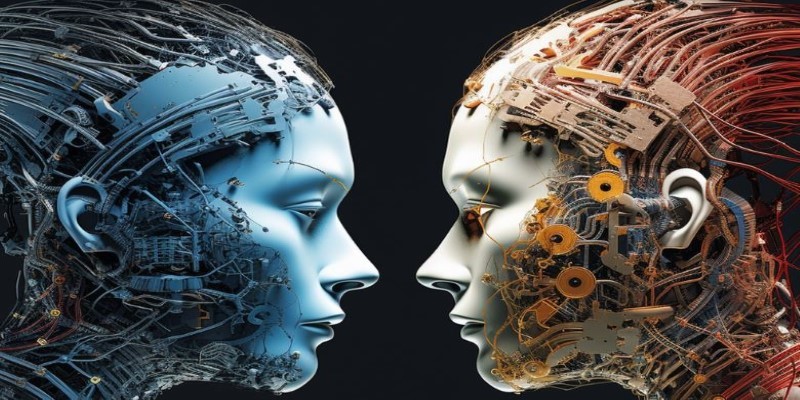
The growing collaboration between Symbolic AI and Subsymbolic AI is leading to the development of hybrid AI—a fusion of both approaches. Rather than choosing one over the other, hybrid AI aims to leverage the strengths of each, combining structured knowledge with raw data-driven learning.
A key example of hybrid AI in action is the use of neural networks to process visual data, a task often handled by Symbolic AI. For instance, a self-driving car might use a neural network to recognize a stop sign. The output from the network can then be fed into a symbolic reasoning engine, which allows the car to make decisions based on traffic laws—deciding whether to stop or proceed based on the context.
Another example is the neural-symbolic system, which integrates logic directly into the learning process. These systems not only teach AI to recognize objects (like a cat in a photo) but also aim to understand the underlying concepts in a more structured way. Research projects like OpenCog and IBM’s Neuro-Symbolic Concept Learner are trailblazing in this area, combining the explicit knowledge of symbolic reasoning with the intuitive pattern recognition of Subsymbolic AI.
This blending of both systems touches the very essence of what intelligence is. Symbolic AI excels in clear, explicit knowledge that can be documented and manipulated. At the same time, Subsymbolic AI focuses on learning from data, capturing implicit knowledge—the "gut feeling" we get from experience. True intelligence, whether artificial or human, seems to rely on both systems working together. Humans use symbols for tasks like solving math problems but also depend on instincts for activities like recognizing faces or catching a ball. For AI to approach human-like thinking, it will need to combine both structured logic and intuitive learning, as hybrid AI aims to do.
Symbolic AI and Subsymbolic AI represent two fundamental approaches to artificial intelligence, each with its strengths and limitations. Symbolic AI relies on logic, structure, and clear rules to represent and reason about knowledge, making it ideal for tasks requiring transparency and accountability. In contrast, Subsymbolic AI learns from data patterns, excelling in tasks like image recognition and natural language processing, though it struggles with interpretability. The future of AI lies in blending both approaches, creating systems that combine the logical rigor of Symbolic AI with the adaptive power of Subsymbolic AI, ultimately advancing the capabilities of intelligent machines.

Refine your brand strategy with ChatGPT by clarifying your messaging, aligning your voice, and adapting in real time. Make your brand consistent and compelling
Discover 7 free and paid LLMs to enhance productivity, automate tasks, and simplify your daily personal or work life.
Understand artificial intelligence with a clear definition and an in-depth look at its real-world scope across industries, daily life, and future impact
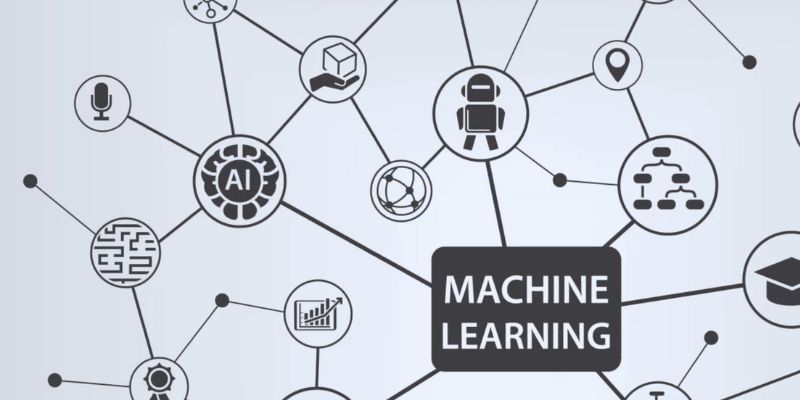
Learn simple steps to estimate the time and cost of a machine learning project, from planning to deployment and risk management
Learn five powerful ways machine learning transforms digital marketing through smarter targeting, personalization, and support
Investigate why your company might not be best suited for deep learning. Discover data requirements, expenses, and complexity

AI in space exploration is changing how we study distant planets. Discover how autonomous rovers and mission planning powered by AI are shaping the future of space missions

Find out the key differences between symbolic AI vs. subsymbolic AI, their real-world roles, and how both approaches shape the future of artificial intelligence

best YouTube channels, StatQuest with Josh Starmer, channels focused on applied statistics
Get a clear understanding of Strong AI vs. Weak AI, including how Artificial General Intelligence differs from task-specific systems and why it matters in today’s tech-driven world

Unlock game-changing secrets to dominate Amazon with ChatGPT. Discover how this powerful AI tool can transform your product research, listing optimization, customer support, and brand scaling strategies, giving you a competitive edge on Amazon

AI in Art is reshaping creative industries with Generative Art and Music. Learn how artists are using AI creativity tools to explore new artistic possibilities and redefine modern expression