Projects in machine learning can be fascinating but also challenging. Time and cost estimation is not always easy. These initiatives span several phases, each requiring meticulous preparation and funding. Ignoring this stage could cause your project to fail or run too expensive. Good estimates enable you to avoid surprises and effectively plan. Your objectives, data, tools, and team will determine time and expenses.
For instance, basic models run less time than deep learning models. Knowing what to expect helps one prevent budget problems and delays. This guide walks over how to create reasonable approximates. You will discover elements influencing time and cost. You will also find how to dissect every phase. It will help you to schedule your machine learning project confidently.

These are the main steps you should take to project the time and expenses of your machine learning project.
First, grasp the fundamental goal of the project. Find out what the model of machine learning ought to perform. It guides your tool and approach selection. It also facilitates the projection of the required resources and effort. Then, list the characteristics your model requires. Is it for image classification, prediction, or language processing? Every category calls for varying degrees of time and knowledge. More expensive and time-consuming goals will be complex to achieve. Check also whether the objective is still shifting or clear. Easy planning arises from a steady aim. A shifting objective might entail more time and expenses.
Every machine learning effort revolves around data. Find out first whether the data is accessible. If not, gathering it could take weeks or months. That calls for time and money. Look at the data quality next. Is it whole and spotless? Alternatively, does it feature missing values? Data cleansing can occupy as much time as model construction. Poor models and additional work later follow from dirty data. View the dataset's size as well. A tiny dataset handles faster. Large datasets call for greater time, storage, and processing capability. It will raise the expenses of your project.
The kind of machine learning method influences the time and project expenses. Cheap and quick are simple models like linear regression. Deep learning and other complex models call for more time and strong computers. Also, take into account the instruments and platforms you intend to use. Tools available in open-source can help to save money. They may demand extra time for setup. While they provide speed, cloud systems might increase the cost. Select tools your staff already knows. Add that time and money to the budget if they require training. Learning new instruments during the project could create delays.

Sort the project into phases to estimate well. Every phase requires a budget and schedule all its own. This method simplifies and increases the accuracy of planning.
Common phases include:
The size and abilities of your staff significantly influence project time and cost. Faster problem-solving and faster working speed are benefits of a qualified workforce. Skilled professionals might cost more than an hour. Given a small crew, the project might take more time. If you add additional people, you might finish earlier. A larger team also follows more communication and management. That will raise the general expenses. Also, take into account whether you require outside assistance. Hiring freelancers or consultants raises expenses.
Projects using machine learning need more than just code. You also require servers, memory, and computational capability. These can raise the expenses of your project. Check the pricing if you make use of cloud systems. You might pay for bandwidth, storage, or computational hours. If your model is run often or is huge, these expenses increase.
Additionally, it requires time for deployment. The model should be tested in practical environments. Sometimes, this stage calls for additional tools or platforms. These instruments could come with expenses. Remember also to track and update the following deployment.
Projects on machine learning might suffer delays. Any moment can bring fresh challenges. Add buffer time and budget always for unanticipated problems. You may discover that the data is below expectations. Alternatively, a tool might not function as intended. Correction of these issues could take days or weeks. One should include 20–30% extra time and expenses as a buffer. It lets you cover hazards without deviating from your overall plan. Review your estimations also rather often. Alter them should the scope of the project alter.
One can project time and money in various ways. You might apply task-based planning, historical projects, or professional judgment. For best results, combine more than one approach.
A few useful strategies consist of the following:
Project time and cost estimation for machine learning require rigorous preparation and knowledge. You must set objectives, examine data quality, and select appropriate techniques. Division of the work into phases simplifies the procedure. Time and money also change depending on infrastructure and team competencies. Including buffers always helps to manage unanticipated delays. Estimating correctly allows one to create a reasonable schedule. As necessary, go over and change your strategy. Clear processes and clever techniques will help you to keep inside your budget and run machine learning projects without problems.

AI in Legal Tech is reshaping how law firms handle contract analysis and research. Discover how this technology improves accuracy, reduces errors, and saves valuable time in legal processes

Understand artificial intelligence with a clear definition and an in-depth look at its real-world scope across industries, daily life, and future impact

AI in Art is reshaping creative industries with Generative Art and Music. Learn how artists are using AI creativity tools to explore new artistic possibilities and redefine modern expression

Meet the top AI influencers of 2025 that you can follow on social media to stay informed about cutting-edge AI advancements

AI in space exploration is changing how we study distant planets. Discover how autonomous rovers and mission planning powered by AI are shaping the future of space missions

AI in Customer Service is reshaping how businesses connect with customers through smart chatbots and virtual assistants. Discover how this technology improves support, personalization, and customer satisfaction

Discover 20+ key content marketing statistics from 2024 to refine your 2025 strategy and boost engagement, ROI, and conversions

Discover 7 free and paid LLMs to enhance productivity, automate tasks, and simplify your daily personal or work life.

Get a clear understanding of Strong AI vs. Weak AI, including how Artificial General Intelligence differs from task-specific systems and why it matters in today’s tech-driven world

How AI in advertising is transforming targeted marketing campaigns by enabling businesses to create personalized ads, improve customer experience, and boost conversion rates. Learn the future trends in AI-driven advertising

Refine your brand strategy with ChatGPT by clarifying your messaging, aligning your voice, and adapting in real time. Make your brand consistent and compelling
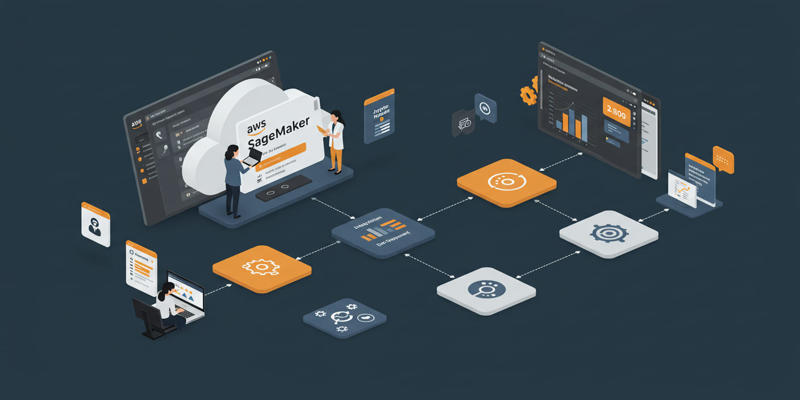
SageMaker Unified Studio AWS creates one unified environment connecting analytics and AI development processes for easy data management, data governance, and generative AI workflow operations.