Reaching beyond our planet has always captured human imagination, but space is not a place for mistakes. Every mission faces risks, distance limits, and the unknown. That’s why AI in space exploration is no longer just an idea — it’s a necessity. With smart machines taking charge, autonomous rovers now navigate harsh landscapes without waiting for human commands.
AI assists them in gathering data, staying safe, and making instantaneous decisions a million miles from Earth. New worlds are not simply about smarter, safer, and faster ways of doing things—they're about smarter, safer, and faster. AI is becoming the spine of space missions like never before.
AI in space exploration is changing the way we reach and study worlds beyond Earth. Space is full of challenges that humans alone cannot easily manage. Harsh conditions like powerful dust storms, extreme temperatures, and rough, unknown terrain make distant planets like Mars difficult to explore. Adding to that, communication between Earth and rovers on other planets can take several minutes or even hours, making quick decision-making nearly impossible from the ground.
This is where AI delivers. Through AI, self-driving rovers can reason and move independently. They drive through hostile terrain, sidestep hazards, and make intelligent decisions in real-time—all without having to look to their operators for a response. This capability is essential for collecting samples, venturing into new terrain, and carrying out research without risk.
However, AI in space exploration is not only about operating rovers. It's also necessary for mission planning. AI applications assist scientists in analyzing data, selecting safer landing sites, and developing effective mission plans. That results in quicker planning, lower costs, and increased chances of success in each mission, which leads us to unravel the secrets of space.
Autonomous rovers and mission planning are at the heart of future space missions. These rovers are equipped with advanced sensors, cameras, and AI-powered software that allow them to work independently. For example, NASA’s Perseverance rover on Mars uses AI to drive itself across difficult terrain, avoid hazards, and choose the best routes.
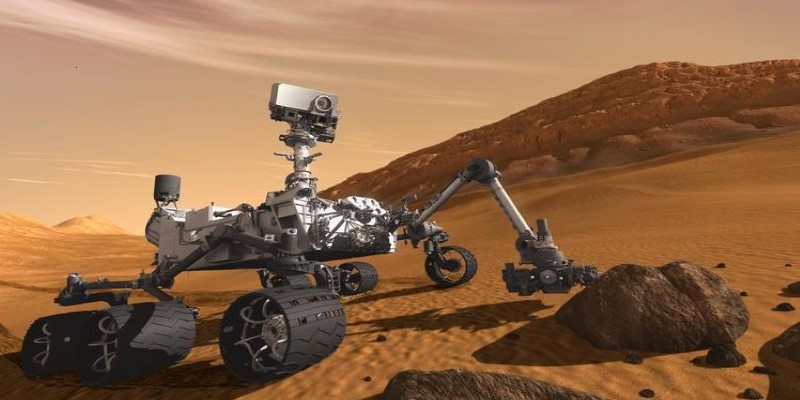
Autonomous rovers are not only built to move. They are designed to carry out scientific research. AI allows these machines to analyze soil, rocks, and the atmosphere without human control. They can identify interesting features, collect samples, and even store them for future return missions.
One of the biggest benefits of autonomous rovers and mission planning is the ability to explore places that are dangerous or unreachable for humans. Deep craters, high cliffs, and narrow caves can be studied without risking human life. This opens up new areas of research and provides valuable data for future human missions.
AI also enables rovers to learn from their environment. If a rover encounters unexpected problems, its AI system can adjust its behavior. For instance, if a path becomes blocked, the rover can search for an alternative route. This flexibility makes autonomous rovers more reliable and efficient in uncertain environments.
Mission planning is one of the most complex parts of space exploration. It requires careful consideration of many factors, including distance, resources, risks, and scientific goals. AI has become a powerful tool in this area, making the process faster and smarter.
In traditional missions, teams of scientists and engineers spend years planning every detail. However, AI tools can process large amounts of data much faster than humans. They can model possible scenarios, predict problems, and suggest solutions. This is extremely useful for missions to unknown locations where conditions are difficult to predict.
AI in mission planning helps with route optimization, resource management, and risk analysis. For example, in the case of autonomous rovers and mission planning, AI systems can calculate the most energy-efficient paths, monitor battery levels, and adjust plans based on changing conditions.
AI tools analyze satellite images and past mission data to identify safer, high-value landing sites. During missions, AI systems manage schedules, operate scientific instruments, and respond to emergencies, ensuring smoother operations and increasing the chances of mission success in space exploration.
Moreover, AI-powered simulations allow scientists to test their plans in virtual environments before the actual mission. This helps identify weak points and improve strategies, increasing the chances of success.
The future of AI in space exploration looks promising. As technology improves, AI systems will become even more advanced, allowing for more ambitious missions. Scientists are already working on new generations of autonomous rovers and mission-planning tools that will push the limits of what we can achieve.
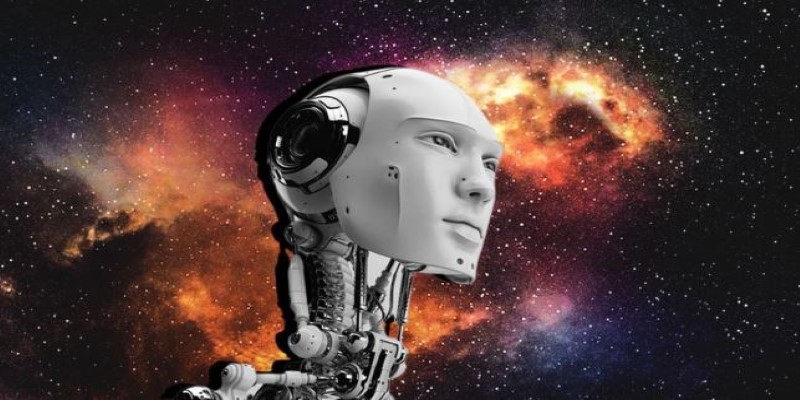
AI will play a central role in future missions to the Moon, Mars, and beyond. Rovers will be more intelligent and capable of working together in teams and sharing information in real-time. This will create a network of machines working side by side to explore vast areas.
AI in space exploration is not limited to planets. It is also being used for asteroid mining, deep-space travel, and searching for signs of life on distant worlds. AI-powered spacecraft may someday navigate through space without human control, making decisions about course changes, obstacle avoidance, and system management on their own.
The combination of autonomous rovers and mission planning will also make long-term human presence in space more possible. AI will support life support systems, habitat management, and communication networks in future space stations or colonies.
The development of AI in space exploration is a step toward making space travel safer, more efficient, and more affordable. It allows scientists to focus on higher-level research while machines handle routine tasks and respond to emergencies.
AI in space exploration is shaping a smarter and safer future for space missions. With autonomous rovers and mission planning, AI helps explore distant worlds with greater accuracy and efficiency. It allows machines to work independently, handle challenges, and support human goals in space. As technology advances, AI will continue to play a vital role in exploring new planets, managing resources, and driving future space missions, bringing us closer to discovering the unknown corners of the universe.

Conversational chatbots that interact with customers recover carts, and cleverly direct purchases will help you increase sales

How AI in advertising is transforming targeted marketing campaigns by enabling businesses to create personalized ads, improve customer experience, and boost conversion rates. Learn the future trends in AI-driven advertising

Refine your brand strategy with ChatGPT by clarifying your messaging, aligning your voice, and adapting in real time. Make your brand consistent and compelling

Learn five powerful ways machine learning transforms digital marketing through smarter targeting, personalization, and support
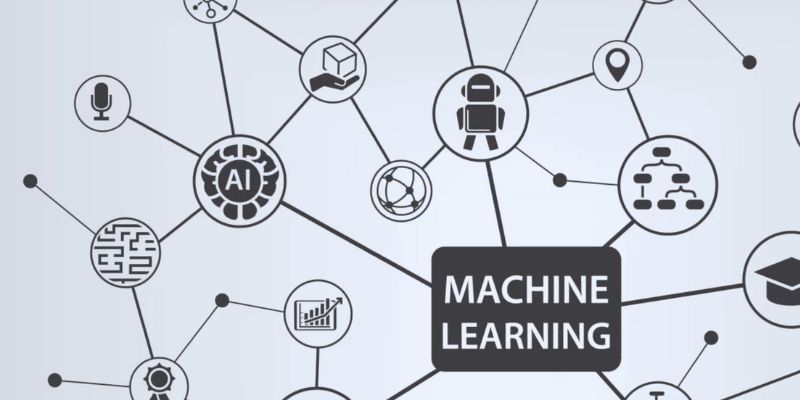
Learn simple steps to estimate the time and cost of a machine learning project, from planning to deployment and risk management

Get a clear understanding of Strong AI vs. Weak AI, including how Artificial General Intelligence differs from task-specific systems and why it matters in today’s tech-driven world

AI security risks are rising, with adversarial attacks targeting machine learning models. Learn how these attacks work and what steps can protect AI systems from growing security threats

Find why 2025 is the perfect year to leverage JavaScript for ML, with real-time apps, edge computing, and cost-saving benefits

Understand artificial intelligence with a clear definition and an in-depth look at its real-world scope across industries, daily life, and future impact

AI for Smart Cities is transforming urban living by improving traffic and energy management systems. Discover how smart technologies are making cities more efficient and sustainable

From predicting customer preferences to improving supply chain management, AI has transformed the retail industry in various ways

AI in Art is reshaping creative industries with Generative Art and Music. Learn how artists are using AI creativity tools to explore new artistic possibilities and redefine modern expression