As artificial intelligence continues to evolve, the impact on the workforce is becoming increasingly apparent. What once seemed like futuristic possibilities are now realities, with AI systems automating tasks that humans traditionally carried out. This rapid shift raises a critical question: What happens to the millions of workers whose jobs are being displaced?
While AI offers incredible potential for efficiency and innovation, the fear of job loss and the uncertainty it brings are very real. In this article, we’ll explore the risks associated with job displacement due to AI and discuss the solutions that can help safeguard our workforce’s future.
The risks of job displacement due to AI aren't simply about machines taking over — they're about what happens after. When companies automate processes to cut costs, workers frequently end up getting fired abruptly without the knowledge or funds to easily shift. Low-skilled and routine work is particularly at risk. In factories, robots assemble faster than humans. In offices, AI can sort data or write reports with precision and without tiredness.
Retail, customer service, transportation, and manufacturing are among the most affected industries. Self-service checkouts minimize the use of cashiers. Customer service robots using AI answer thousands of questions without assistance. Autonomous driving technology will revolutionize the logistics and transport sector, endangering millions of driving-related jobs.
But this is not just a blue-collar problem. White-collar jobs are also at risk. Legal research, journalism, finance, and medicine are all starting to notice AI systems doing things that were long thought to be uniquely human. Algorithms can now read X-rays, prepare financial reports, and even write news stories.
This transformation creates increasing unemployment, income inequality, and skills mismatch. For most workers, displacement from employment by AI is more than economic loss—it undermines identity, purpose, and community ties. When jobs are lost, so are the social networks surrounding them.
Despite the risks, it’s important to stay grounded. AI is powerful, but it’s not an all-purpose replacement for human labor. Certain skills remain deeply human — creativity, empathy, critical thinking, and leadership. Jobs that require emotional intelligence, personalized care, or ethical judgment are less likely to be automated anytime soon.
Healthcare, for example, will continue to need human doctors and nurses not just to diagnose but to comfort and guide patients. Teachers bring a personal connection to learning that software can't replicate. Creative industries like art, music, and writing still thrive on uniquely human expression, even if AI assists in the process.
Moreover, AI often creates new jobs alongside those it displaces. History shows us this pattern — during the Industrial Revolution, machines reduced the need for farm labor but led to growth in urban manufacturing and services. The digital age did the same with information technology roles. While some jobs disappear, others emerge in programming, data analysis, system management, and creative development of AI solutions.
However, the transition is not automatic or painless. Without proactive measures, many workers will struggle to find footing in the new economy shaped by AI.
Solving the challenges of job displacement due to AI demands cooperation from governments, companies, educational institutions, and workers themselves. The key is to focus on adaptation and resilience rather than resistance to change.
Investing in reskilling and upskilling programs is crucial for helping workers transition into roles that AI can’t easily replace. Training should focus on both technical skills, like programming, and soft skills, such as communication and critical thinking. Government, online platforms, and companies must make these programs accessible to ensure workers stay competitive in a changing job market.
Education systems must evolve to prepare future generations for an AI-driven world. Schools should prioritize critical thinking, creativity, and emotional intelligence, which machines cannot replicate. By focusing on problem-solving and adaptability, students will learn how to think, not just what to think, making them better equipped to thrive in a constantly evolving job market.
Governments play a critical role in supporting displaced workers with social safety nets. Policies like universal basic income (UBI), wage subsidies, and temporary unemployment benefits can provide financial support during transitions. Tax incentives can also encourage businesses to invest in human-centered job creation, ensuring workers have the time and resources to retrain and pursue new opportunities.
Businesses should adopt responsible AI deployment strategies by gradually integrating automation alongside human workers. This approach prevents mass layoffs and ensures smoother transitions. Companies should also focus on offering continuous learning opportunities and internal mobility programs, allowing employees to adapt to evolving roles. A collaborative approach between humans and AI can enhance productivity while preserving job security.
Workers can future-proof their careers by staying informed about industry trends, learning new skills, and embracing change. Continuous self-improvement, adaptability, and a willingness to collaborate with technology are essential traits for navigating the evolving job market. Workers who remain open to learning and flexible in their roles will remain valuable assets in an AI-driven world.
Job displacement due to AI presents significant challenges, but it also offers opportunities for transformation. By investing in reskilling, fostering innovation, and creating policies that protect workers, we can navigate this shift effectively. While AI may automate certain tasks, it will never replace the human touch, creativity, and empathy essential to many industries. The future of work lies in collaboration between humans and machines. Through adaptation and proactive efforts, we can ensure that the benefits of AI are shared equitably and that displaced workers are empowered to thrive in new roles.
AI security risks are rising, with adversarial attacks targeting machine learning models. Learn how these attacks work and what steps can protect AI systems from growing security threats

Unlock game-changing secrets to dominate Amazon with ChatGPT. Discover how this powerful AI tool can transform your product research, listing optimization, customer support, and brand scaling strategies, giving you a competitive edge on Amazon

AI in Art is reshaping creative industries with Generative Art and Music. Learn how artists are using AI creativity tools to explore new artistic possibilities and redefine modern expression
Get a clear understanding of Strong AI vs. Weak AI, including how Artificial General Intelligence differs from task-specific systems and why it matters in today’s tech-driven world

Meet the top AI influencers of 2025 that you can follow on social media to stay informed about cutting-edge AI advancements
Investigate why your company might not be best suited for deep learning. Discover data requirements, expenses, and complexity
Conversational chatbots that interact with customers recover carts, and cleverly direct purchases will help you increase sales
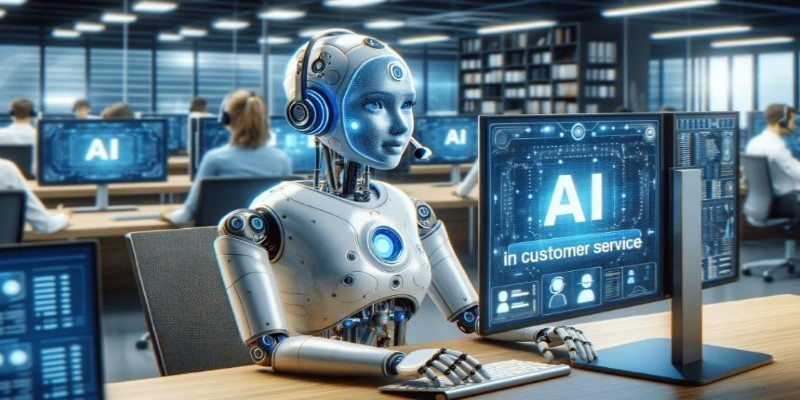
AI in Customer Service is reshaping how businesses connect with customers through smart chatbots and virtual assistants. Discover how this technology improves support, personalization, and customer satisfaction
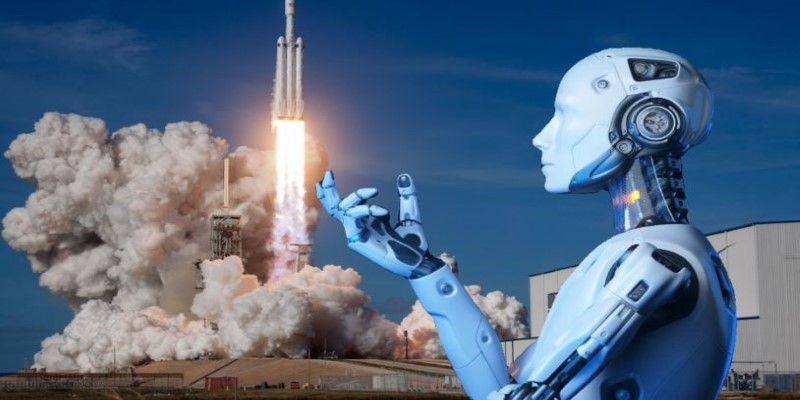
AI in space exploration is changing how we study distant planets. Discover how autonomous rovers and mission planning powered by AI are shaping the future of space missions

Find why 2025 is the perfect year to leverage JavaScript for ML, with real-time apps, edge computing, and cost-saving benefits
Refine your brand strategy with ChatGPT by clarifying your messaging, aligning your voice, and adapting in real time. Make your brand consistent and compelling
AI in Mental Health is transforming emotional care through therapy bots and emotional analysis tools. Discover how AI provides support, monitors emotions, and improves mental well-being