In the fast-paced world of digital marketing, consistently producing high-quality blog posts is essential for engaging your audience and boosting traffic. However, creating original and captivating content can often feel daunting. That’s where Artificial Intelligence (AI) comes in. By leveraging AI tools, content creators can streamline their writing process, improve efficiency, and create blog posts that are informative and optimized for search engines.
This article will explore 8 impactful blog post examples that utilize AI for content creation. These examples help you boost your writing strategy, enhance engagement, and maximize your time and resources.
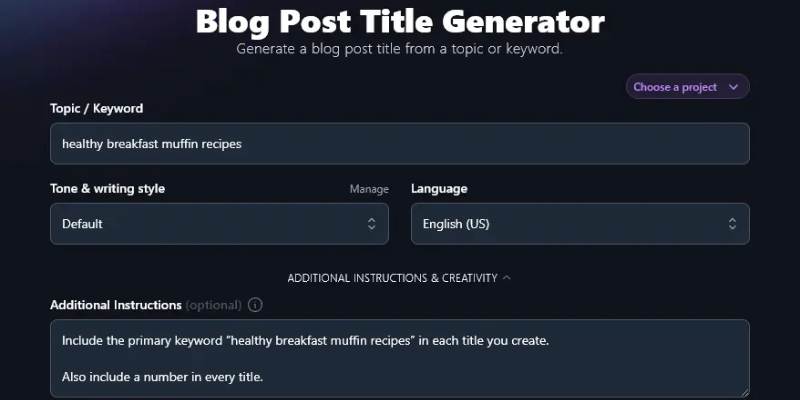
The title of your blog post is often the deciding factor for whether or not someone will click and read. AI tools like Copy.ai and Jasper can assist in generating captivating, SEO-optimized titles that align with your content's focus and target audience.
Example Prompt: “Generate 10 attention-grabbing blog post titles for a post about digital marketing trends.”
AI-driven title generators analyze trending keywords and user behavior to suggest titles more likely to get clicks. This ensures your blog posts stand out in crowded search results and increases click-through rates.
Search Engine Optimization (SEO) is key to ensuring your blog posts are discoverable by search engines like Google. AI tools like Surfer SEO and Writesonic can help you optimize your content by suggesting the most relevant keywords, improving readability, and enhancing on-page SEO elements such as meta descriptions and headings.
Example Prompt: “Generate an SEO-optimized blog post on how to improve content marketing strategies.”
These AI tools analyze high-ranking competitors, suggest keywords with high search volumes, and help structure your content for better performance on search engines. This can help increase organic traffic and boost your blog's visibility.
An engaging introduction is vital for holding your reader’s attention. AI tools like Rytr or Jasper can generate personalized and compelling introductions tailored to your target topic and audience.
Example Prompt: “Write a captivating introduction for a blog post about the benefits of email marketing.”
AI-generated introductions help create a hook that draws readers in and encourages them to continue reading. Whether you want to start with a statistic, a question, or a bold statement, AI tools can easily create engaging opening paragraphs.
Creating a well-structured, informative blog post requires more than just a catchy introduction. AI tools like Grammarly or Jasper can assist with writing the main body of the content. They suggest sentence structure, tone, and grammar while helping with content flow and relevance.
Example Prompt: “Generate a detailed blog post about effective blogging tips for beginners.”
AI tools can provide suggestions for each section of the post, including relevant subheadings, keyword placement, and even expanding on certain points to improve the overall readability of the article.
A strong Call to Action (CTA) is essential to guide your readers toward the next step, whether subscribing to your newsletter, downloading a free resource, or purchasing. AI can help generate persuasive CTAs that are relevant and tailored to your blog's objective. Depending on your audience, these CTAs can be emotional, urgent, or benefit-focused.
Example Prompt: “Generate a CTA for a blog post about product reviews.”
Whether encouraging a sale, asking for feedback, or inviting readers to participate in a webinar, AI tools can create clear and engaging CTAs that increase conversion rates and drive action. The right CTA can mean the difference between a bounce and a conversion, so using AI to refine this step is incredibly valuable.

Sometimes, readers prefer a concise blog post summary to read the entire content. AI tools can help generate high-quality, relevant summaries that capture the key points of your post. These summaries save time for busy readers and improve content accessibility across platforms like newsletters and social media.
Example Prompt: “Write a summary of a blog post about content marketing trends.”
Summarizing your content with AI can help readers quickly understand the post and decide if they want to explore the full article. AI-powered summaries can also improve SEO by generating additional keyword-rich content for search engines to crawl, increasing your chances of ranking higher on Google.
Incorporating visuals like images, infographics, and videos into your blog posts can significantly boost engagement. AI tools like Canva, Design Hill, and Visme can help you create stunning graphics that complement your content. These tools also offer suggestions for layouts, fonts, and brand colors, making design effortless—even for beginners.
Example Prompt: “Generate a set of graphics for a blog post on social media marketing.”
AI design tools allow you to create eye-catching visuals that grab readers' attention, making your content more shareable and increasing its potential to go viral. Custom AI-generated visuals can also help reinforce your blog’s brand identity and deliver a more polished, professional look.
Personalizing your content based on audience segments can drastically improve engagement. AI tools like MarketMuse can help you tailor your blog posts to different customer personas by suggesting relevant content that aligns with their needs, interests, and behavior.
Example Prompt: “Generate personalized content for a blog post targeting small business owners interested in SEO.”
Using AI, you can create content that speaks directly to the unique needs of different audience segments, making your blog posts more effective and engaging.
AI is revolutionizing how we create content, and the examples above show how leveraging these tools can streamline the blog writing process, improve engagement, and optimize for SEO. Using AI for content creation can enhance your writing efficiency and ensure that your blog posts resonate with your audience and rank well on search engines. Whether creating blog titles, expanding on ideas, or promoting your content on social media, AI can make your content creation process faster and more effective. Start implementing AI-powered tools into your content strategy today and watch your blog posts thrive. With AI on your side, the possibilities for creating impactful, high-quality blog posts are endless.

Job displacement due to AI is reshaping industries and careers worldwide. Learn the key risks involved and explore practical solutions to navigate the future of work

How AI in advertising is transforming targeted marketing campaigns by enabling businesses to create personalized ads, improve customer experience, and boost conversion rates. Learn the future trends in AI-driven advertising

AI in Legal Tech is reshaping how law firms handle contract analysis and research. Discover how this technology improves accuracy, reduces errors, and saves valuable time in legal processes

Neuromorphic computing is transforming artificial intelligence by mimicking the human brain. Learn how AI inspired by the human brain is leading to smarter and more energy-efficient technology

Find why 2025 is the perfect year to leverage JavaScript for ML, with real-time apps, edge computing, and cost-saving benefits

Unlock game-changing secrets to dominate Amazon with ChatGPT. Discover how this powerful AI tool can transform your product research, listing optimization, customer support, and brand scaling strategies, giving you a competitive edge on Amazon

Discover 7 free and paid LLMs to enhance productivity, automate tasks, and simplify your daily personal or work life.

AI in space exploration is changing how we study distant planets. Discover how autonomous rovers and mission planning powered by AI are shaping the future of space missions

Meet the top AI influencers of 2025 that you can follow on social media to stay informed about cutting-edge AI advancements

best YouTube channels, StatQuest with Josh Starmer, channels focused on applied statistics

AI in Art is reshaping creative industries with Generative Art and Music. Learn how artists are using AI creativity tools to explore new artistic possibilities and redefine modern expression

AI in Customer Service is reshaping how businesses connect with customers through smart chatbots and virtual assistants. Discover how this technology improves support, personalization, and customer satisfaction